How to Make Your Kid Faster

“How do I make my kid faster?”
I’ve worked with field sport athletes in different countries, in different gyms, and across a lot of strength and conditioning and performance training programs—and this is the question almost every parent asks.
And I completely understand why.

Most youth programs can make kids stronger or improve movement in the weight room, but very few actually show measurable progress when it comes to speed. On top of that, the information online is confusing. Parents start searching and end up in debates about A-skips, B-skips, or get flooded with endless drills that all look important—but don’t really answer the question.
So instead of overcomplicating it, I’ll explain what has consistently worked for my athletes.
If we simplify it as much as possible:
To get faster, a kid needs to sprint close to their maximum speed for a given distance, do that about two times per week, and stay consistent.
That’s it.
Running fast is what makes you faster. Not drills, not bands, not fancy equipment.
But in real life, getting kids to actually reach that “maximum speed” is not as simple as it sounds.
Creating the Right Conditions for Speed
In practice, I follow a few key principles when building a speed program for athletes, especially for youth:
Make sure athletes are fresh and recovered
Create an environment where they actually want to sprint at 100%
Give them the physical and technical tools to run fast
What we’re really trying to do is simple:
We need athletes who are not tired, who are motivated to give full effort, and who actually have the ability to produce fast movement.
As coaches, our job is to build that environment.
That’s where most programs fall short.
Why Effort Alone Is Not Enough
A lot of people think speed training is just about pushing kids harder.
Yelling more. Motivating more. Making them “work harder.”
And yes, that can increase effort.
But effort does not always equal speed.
In fact, I’ve seen athletes actually get slower when they’re pushed too hard without the right structure.
One of the biggest challenges in performance training for athletes is that we can’t accurately judge intensity just by watching.
In the weight room, we have weight on the bar. We can measure load.
In sprinting, the difference between a fast sprint and an average sprint might be very small visually—but very significant in reality. A 10% difference in speed is huge, but you often can’t see it clearly with the eye.
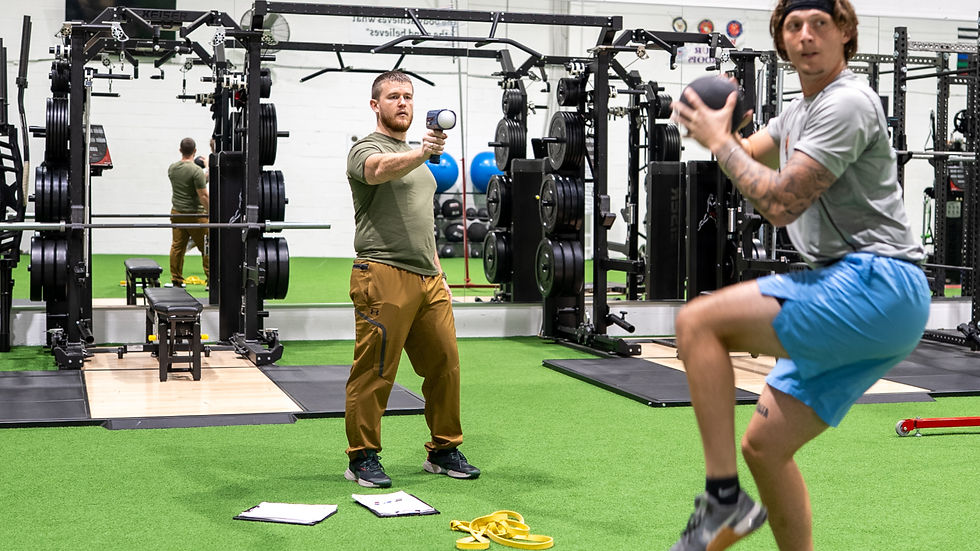
That’s why, in my experience, using timing is critical.
Why Timing Changes Everything
A timing system completely changes how athletes train.
It gives:
Immediate feedback
Objective data
Clear goals
When athletes can see their times, they start to:
Compete with themselves
Compete with others
Stay engaged in the process
It also makes coaching more effective.
You can start to understand what cues work, what communication style works, and how each athlete responds. Every kid learns differently, and having real data helps you adjust your approach.
Without timing, you’re mostly guessing.
With timing, you’re actually coaching.
When Sprinting Alone Is Not Enough
Now, even if we do everything right—good program, good environment, timing system—you’ll still see something interesting:
Some kids still won’t sprint fast.
In almost every group, around 20–40% of athletes struggle to produce real speed.
And this is where things get a bit more complex—but also more important.
Usually, it comes down to two main issues.
First, they may not have the physical ability.
They don’t have enough strength in the right positions to produce force during sprinting. For example, they might not be strong enough to hold proper angles during acceleration.
Second, they may lack the movement skills.
Sprinting requires specific positions, timing, and coordination. For many kids, especially those who haven’t been exposed to proper training early, this doesn’t come naturally.

How We Actually Fix It
If an athlete cannot produce speed, they also cannot create the stimulus needed to improve.
They stay slow—not because they aren’t trying, but because they physically cannot access the speeds required for adaptation.
In those cases, sprinting alone is not enough.
We have to build the missing pieces through strength training for athletes and targeted exercises.
That might look like:
Building lower body strength so they can hold better positions during acceleration
Using plyometrics to develop speed-strength safely
Selecting exercises that match their current level but still produce enough force or speed
This is where real coaching comes in.
It’s not about giving everyone the same drills—it’s about identifying what each athlete is missing and solving that specific problem.
This part is not always simple, and it takes experience.
But it’s also the most rewarding part of coaching.
Seeing a young athlete finally hit positions they’ve been working on for months…Watching their sprint times drop…Seeing their results start to match or exceed others in their age group…
That’s what makes it worth it.
Final Thoughts for Parents
If you’re a parent trying to help your kid get faster, don’t overcomplicate it.
Your child needs:
Consistent sprint exposure
Proper recovery
A structured strength and conditioning program
Coaching that actually identifies and solves their limitations
Not just more drills.
Speed is not built from random exercises—it’s built from the right stimulus, applied consistently, in the right environment.
Speed Training for Athletes in Boca Raton
At Craftsmen Strength and Conditioning, we focus on building complete athletes through structured performance training, strength training, and individualized speed programs.
We work with:
Tennis players
Football athletes
Baseball players
Youth and developing athletes
Located in Boca Raton, serving Delray Beach, Boynton Beach, and surrounding areas.
If you want to get started, the best first step is a performance evaluation.
Learn more or schedule here:https://www.craftsmengym.com/