
Power Training for Athletes: What Actually Works

A lot of athletes and parents ask me the same question: what’s the best way to develop power?
Usually they expect a specific answer—a method, a system, something “optimal.” But after years of coaching and testing athletes, I can tell you this: there is no one perfect method.
You don’t need a specific velocity zone. You don’t need force plate numbers going up every week. You don’t need to avoid heavy, slow reps. And it’s completely normal to feel tired during a well-structured strength and conditioning program.
What actually matters in power training for athletes and performance training is not the method itself—it’s how you organize training over time.
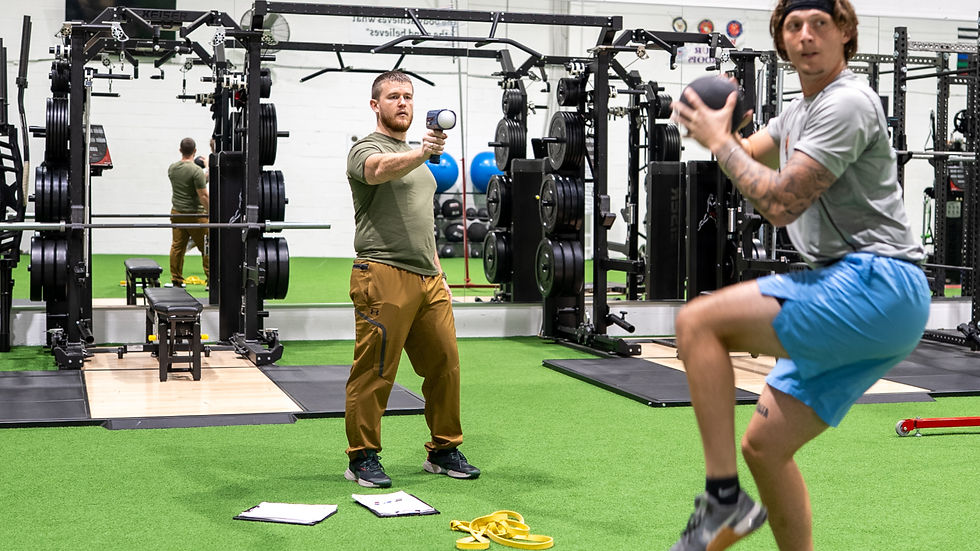
Why Chasing the “Best Method” Doesn’t Work
For most of my career, I was focused on finding better methods.
Using jumps, sprints, and throws as my main testing tools, I was constantly adjusting intensity, volume, contraction speed, and different types of overload. Some approaches clearly worked better than others, especially depending on the athlete, but there was always the same issue—at some point, progress in power tests would stall.
It didn’t matter how advanced the method was.
The biggest shift for me wasn’t finding a better exercise or a better loading strategy. It was understanding how to structure training.
Instead of trying to improve everything at the same time, I started organizing training into phases. You focus on building specific qualities first, and then you create the conditions to express them.
A simple example. Let’s say we’re working on lower body power.
We might start with a phase focused on strength training for athletes—heavy squats, controlled reps, building force production. During this phase, we still include some jumps, but they’re not the priority.
Then we move into a 3–4 week phase focused more on explosive work—plyometrics, loaded jumps, faster movements. Strength work is still there, but now it supports the goal instead of being the main focus.
In the first phase, we’re trying to improve squat strength. In the second phase, we’re trying to improve vertical jump.
Not everything at the same time.

Why Structure Matters More Than Variety
That’s a big difference from how most programs are built.
A lot of strength and conditioning programs try to develop everything at once. And I understand why. It’s more convenient, it fits group training better, and it works when you don’t have full control over an athlete’s schedule. I started there too, especially working with fighters who don’t have a predictable offseason.
But once I started consistently tracking real data, it became clear that trying to push everything at the same time usually slows everything down. It also makes fatigue harder to manage, and it’s much harder to actually peak performance.
With a more structured approach, you can push certain qualities harder, manage fatigue better, and create real progress.
This is also where a lot of people misunderstand fatigue. When we focus on building strength or increasing volume, athletes get tired. Jumps might not improve right away. Sprint times might even look worse for a period of time. And the first reaction is that something is not working.
But in reality, that fatigue is often necessary. You’re building the qualities—you just can’t see them yet.
That’s why we include phases where fatigue is reduced and explosive work is emphasized. That’s when athletes can actually express what they’ve built, and that’s when you see improvements in performance.

How This Applies to Different Athletes
The exact structure can look a little different depending on the sport.
In a speed program for athletes, like tennis or football, sprint performance becomes a major focus. In baseball, we spend more time on rotational power. In MMA, wrestling or hockey we also have to consider endurance and repeat-effort capacity.
The duration of phases, the volume, and the level of fatigue we can allow will change depending on the athlete and the sport. But the principle stays the same—build, then express.
Across all the athletes I’ve worked with in strength and conditioning and performance training, this approach has been very consistent. When training is structured this way, vertical jump improves, sprint performance improves, and overall power output goes up. I’ve never had an athlete complain about improving 15–20% in their power tests.
The only real requirement is consistency. This kind of training only works if the athlete shows up, follows the program, and sticks with it long enough for the phases to do their job. Without that, no method really works.
If You’re an Athlete or Parent Reading This
If your goal is to improve speed, strength, and power, you don’t need random workouts or constantly changing programs.
You need a structured strength and conditioning program built around long-term development.
That’s exactly what we focus on at Craftsmen Strength and Conditioning. We work with tennis players, baseball athletes, football players, MMA and combat sport athletes, as well as youth and collegiate athletes. Our programs focus on strength training for athletes, speed programs for athletes, and overall performance training built around testing and individual progression.
We’re located in Boca Raton and work with athletes from Delray Beach, Boynton Beach, and surrounding areas.
If you want to get started, the best first step is a performance evaluation.
You can learn more or schedule here:https://www.craftsmengym.com/

